
In the fast-paced world of custom manufacturing and signage, small changes in process can lead to big gains in productivity. One such transformation that’s been gaining momentum is the shift from traditional screen printing to digital direct printing for applying graphics on acrylic surfaces. This move isn’t just about swapping tools—it’s a genuine efficiency revolution that’s reshaping how businesses create everything from retail displays to architectural accents.
Acrylic, that versatile, crystal-clear plastic, has long been a favorite for designers and fabricators. Its lightweight nature, durability, and ability to be formed into almost any shape make it ideal for point-of-purchase displays, illuminated signs, trophy panels, and even protective boxes or stands. But getting vibrant, durable images onto its smooth, non-porous surface has traditionally been a bit of a chore.
For decades, screen printing—also known as silk screening—dominated the scene. The process starts with creating a stencil on a fine mesh screen for each color in the design. Ink is then forced through the open areas of the screen onto the acrylic sheet using a squeegee. It’s a hands-on method that’s proven reliable for producing bold, solid colors and has excellent durability.

However, anyone who’s worked in a print shop knows the downsides. Preparing those screens takes time—often several hours for multi-color jobs involving film positives, emulsion coating, exposure, and washing out. Once set up, it’s great for churning out hundreds or thousands of identical pieces. But for smaller runs or custom orders with complex designs, gradients, or photographic elements? It becomes inefficient and costly. Changing a design means starting over with new screens. Halftones for shading can be tricky, and the whole setup leads to more waste from test prints and cleanup.
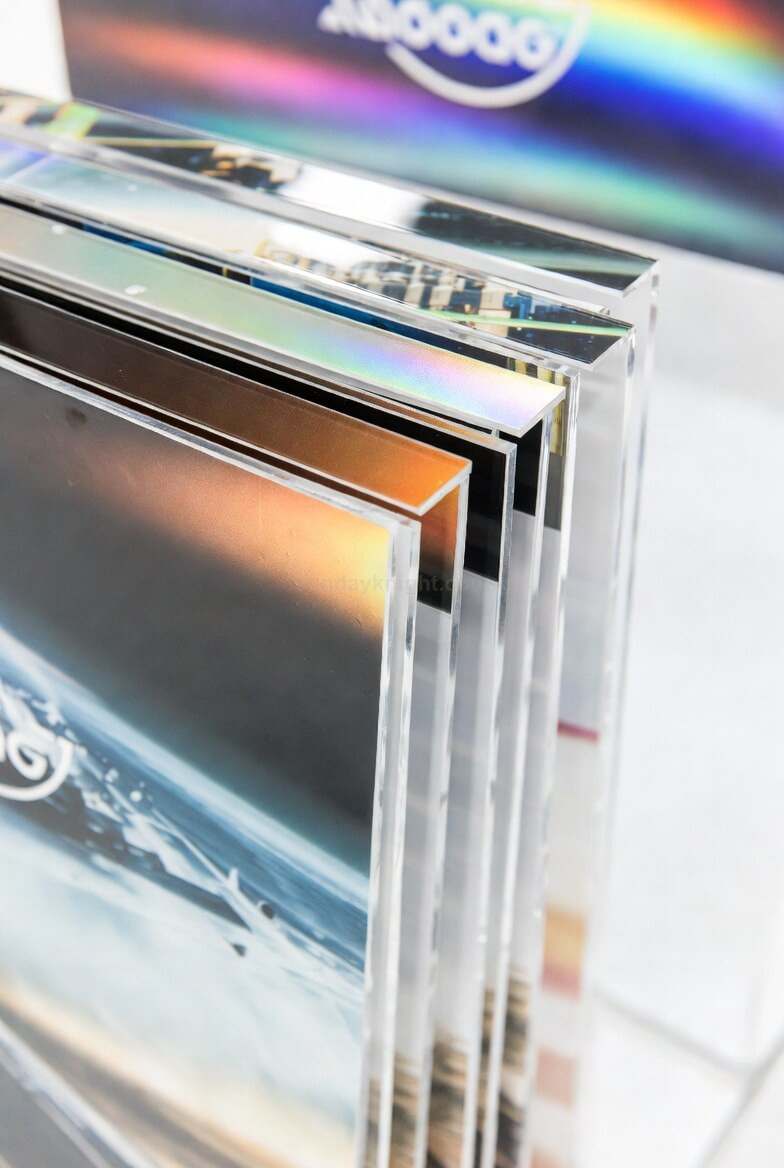
Enter digital direct printing, particularly UV flatbed inkjet technology. This modern approach allows printers to jet specially formulated UV-curable inks straight onto the acrylic from a digital file. No screens, no films, no lengthy preparation. The printer head moves across the flat sheet, depositing ink in full color with incredible precision, and UV lamps cure it instantly as it goes. The result is a print that’s bonded tightly to the surface, often with superior scratch resistance and weatherability.
The efficiency gains are striking. What used to take a full day or more in setup and printing for a small batch can now be accomplished in hours. Turnaround times shrink dramatically, which is a game-changer for clients needing quick prototypes or last-minute event signage. Costs drop for short-run production because there’s no per-design setup fee eating into the budget. Designers have more freedom too—full-color photos, smooth gradients, fine details, and even variable data printing (like unique serial numbers or personalized text) become straightforward.
At Sunday Knight, embracing this technology has allowed us to meet a wider range of customer demands without compromising on quality. Imagine a retail client needing 25 unique promotional displays with intricate branding elements and photos. Under the old system, it might involve multiple screen sets and extended production schedules. With digital direct printing, files are prepped quickly, printed in one go, and ready for finishing like cutting or edge polishing much sooner.
Quality-wise, digital prints hold their own or even surpass in certain areas. UV inks adhere exceptionally well to acrylic, providing vibrant colors that resist fading. The instant curing minimizes smudging and allows for layering effects, such as printing white underbase for opaque areas or clear varnishes for protection and texture. While screen printing still excels in some high-volume scenarios with very specific Pantone matches, the digital method’s versatility often makes it the smarter overall choice today.
Beyond speed and cost, there are environmental perks. Digital printing typically generates less waste—no excess emulsion or screen cleaning chemicals in the same quantities. It’s more aligned with lean manufacturing principles, where you print what you need when you need it.
This transition reflects broader trends in the industry toward customization and agility. In a market where consumers and businesses expect personalization and rapid delivery, being able to respond quickly gives a competitive edge. Acrylic fabricators who adopt digital direct printing can take on more diverse projects, from one-off artistic installations to medium-sized commercial orders, all while keeping overhead low.
Of course, it’s not that screen printing is obsolete. For massive runs of simple logos in one or two colors, it can still be highly economical. Many shops now use a hybrid approach, choosing the best method per job. But the momentum is clearly toward digital for most acrylic graphic applications.
Looking ahead, as printer resolutions improve and ink formulations advance further, we can expect even more impressive results—perhaps integrated with 3D texturing or smart materials. The efficiency leap we’re seeing now is just the beginning of what’s possible with acrylic surfaces.
For businesses and designers working with acrylic, this evolution means more options, faster service, and better value. Whether you’re creating eye-catching store fixtures or elegant informational panels, the move to digital direct printing is opening doors to creativity that were previously constrained by time and process limitations.
As the industry continues to evolve, staying ahead with these technological advancements ensures that acrylic remains a top choice for visual communication. The leap from screen to digital isn’t just about efficiency—it’s about unlocking new potential in design and production.
 English
  Deutsch
  Français
  Italiano
  Español
  Nederlands
  한국어
한국어