
When you order a high-gloss acrylic panel for a retail display, a luxury signage project, or a custom furniture piece, the first thing your customer notices is the surface. That mirror-like shine is what sells the product. But achieving and maintaining that flawless look is harder than most people imagine. Tiny imperfections that are invisible under normal room light can suddenly jump out under showroom spotlights or bright sunlight. That’s why, at Sunday Knight, we’ve spent the last two years refining a strict, numbers-based inspection system specifically for high-gloss acrylic sheets and fabricated parts.


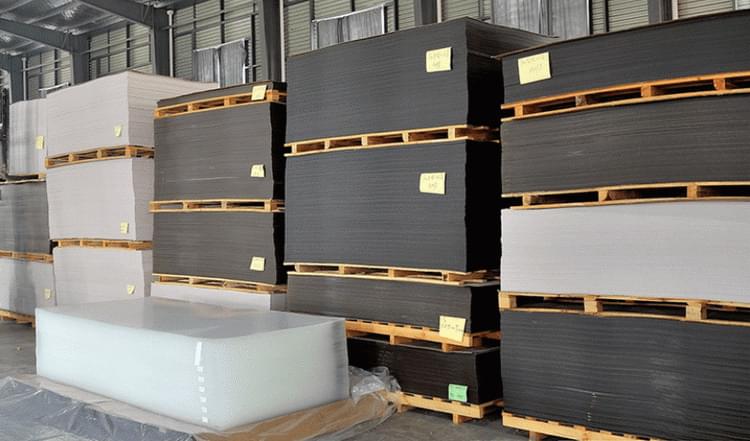
We call it our Quantitative Grading Protocol. Instead of the old “looks good enough” approach, every panel is now evaluated using measurable criteria for three of the most common surface defects: scratches, bubbles, and stress marks. The goal is simple—give our production team, quality inspectors, and customers the same clear language about what is acceptable and what isn’t.
High-gloss acrylic (usually PMMA with a polished or extruded mirror finish) reflects light so perfectly that even a 0.1 mm defect can look like a deep gouge. Traditional visual checks under ordinary lighting often miss problems or create arguments between supplier and buyer. Our new system removes the guesswork by combining controlled lighting, magnification, and exact limits on size, quantity, and visibility.
Let’s break down the three defects and how we grade them.
Scratches
Scratches are the most frequent complaint. They usually come from handling during cutting, routing, or packing. Under our protocol, every panel is inspected under a standardized 45-degree LED light box at 5000K color temperature. We measure length, width, and depth with digital calipers and a 10x loupe.
- Grade A (Premium): No visible scratches longer than 0.3 mm. Maximum of two micro-scratches (under 0.1 mm wide) per square meter, and none deeper than 0.02 mm. These panels go straight to our flagship projects.
- Grade B (Commercial): Scratches up to 1.0 mm long allowed, but no more than five per square meter. Depth must stay under 0.05 mm. Still perfectly usable for most indoor signage and displays.
- Grade C (Utility): Scratches up to 3 mm long, maximum ten per square meter. These are clearly visible under strong light but acceptable for backlit or non-critical applications.
Anything beyond Grade C is rejected and sent back for re-polishing or recycling.
Bubbles
Bubbles—tiny air pockets or voids trapped during extrusion or casting—create bright spots that catch the eye like stars on a dark night. We inspect both front and back surfaces under transmitted light (backlighting the sheet) and reflected light.
Our grading looks at both individual bubble size and total count within a 300 mm × 300 mm inspection grid:
- Grade A: Maximum bubble diameter 0.2 mm. No more than three bubbles per grid, and none clustered within 50 mm of each other.
- Grade B: Maximum diameter 0.5 mm. Up to eight bubbles per grid, with no visible “constellation” effect from the customer’s normal viewing distance (60–80 cm).
- Grade C: Maximum diameter 1.0 mm. Up to fifteen bubbles per grid. These panels are still structurally sound but are directed toward applications where the surface will be viewed from farther away or will have printed graphics applied.
We also record bubble depth because a surface-breaking bubble feels different to the touch and can collect dust over time.
Stress Marks (Crazing or Stress Whitening)
Stress marks are the sneakiest defect. They appear as faint white lines or haze caused by internal molecular tension, often triggered by improper cooling, machining heat, or chemical exposure. Unlike scratches and bubbles, stress marks can actually grow over time if the part is under load or exposed to certain cleaners.
We use a polarized light table to make these marks pop. The inspector rotates the panel under cross-polarized filters and measures the length and density of any visible white lines.
- Grade A: No stress marks visible under polarized light at 10x magnification. Zero tolerance.
- Grade B: Stress lines shorter than 5 mm, maximum three per square meter, and only faint under normal viewing conditions.
- Grade C: Lines up to 15 mm, maximum eight per square meter. These are acceptable only for non-optical, structural uses.
Any panel showing stress marks longer than 15 mm or with a “craze network” pattern is immediately scrapped.
Every inspected sheet receives a small laser-etched grade code in a non-visible corner (for example, “HG-A-2403-01” meaning High-Gloss Grade A, March 2024 batch, sheet 01). Customers who order through sundayknight.com can request the full inspection report with photos of the actual panel before it ships.
Implementing this system wasn’t cheap. We invested in new lighting stations, digital measuring tools, and training for our entire quality team. But the payoff has been immediate. Return rates for surface-related issues dropped by more than 60 % in the first six months. More importantly, our clients tell us they finally feel confident ordering high-gloss acrylic without the usual “hope it looks good when it arrives” anxiety.
We’re also seeing interesting side benefits. Designers who specify Grade A surfaces now use the grading data to plan lighting angles and viewing distances more accurately. Fabricators who buy Grade B material know exactly what they can and cannot sand or polish without risking the part. Everyone speaks the same numbers-based language.
Of course, no inspection system is perfect. Acrylic is still a living material that reacts to temperature, humidity, and handling. That’s why we continue to update our limits based on real-world feedback from projects installed around the world. If you’ve recently received a Sunday Knight high-gloss panel and want to understand its grade, just drop us a message through the contact form on sundayknight.com with your batch number. We’re happy to walk you through the report.
In an industry full of marketing claims about “optically clear” and “flawless,” we believe real transparency starts with honest, measurable standards. Our new quantitative grading system for scratches, bubbles, and stress marks is our way of putting that belief into practice—one perfectly inspected sheet at a time.
 English
  Deutsch
  Français
  Italiano
  Español
  Nederlands
  한국어
한국어