
How to choose a mahjong set you will still want to play with a decade from now.
By Ling Hu
Mahjong is a game of small, repeated gestures. You build a wall. You draw. You discard. You tilt a tile toward the light to make sure that bamboo stroke is a 6 and not an 8. Over a long evening those gestures happen hundreds of times. A set that is too light, too glossy, too small, or missing the tiles your rules require does not just look wrong. It quietly wears you down.
Most of the bad purchases I see come from the same two mistakes: buying the wrong variant, or buying tiles that look fine in a product photo and feel cheap once they are on the table. The rest — material, size, racks, the box — is easier once those two are settled.
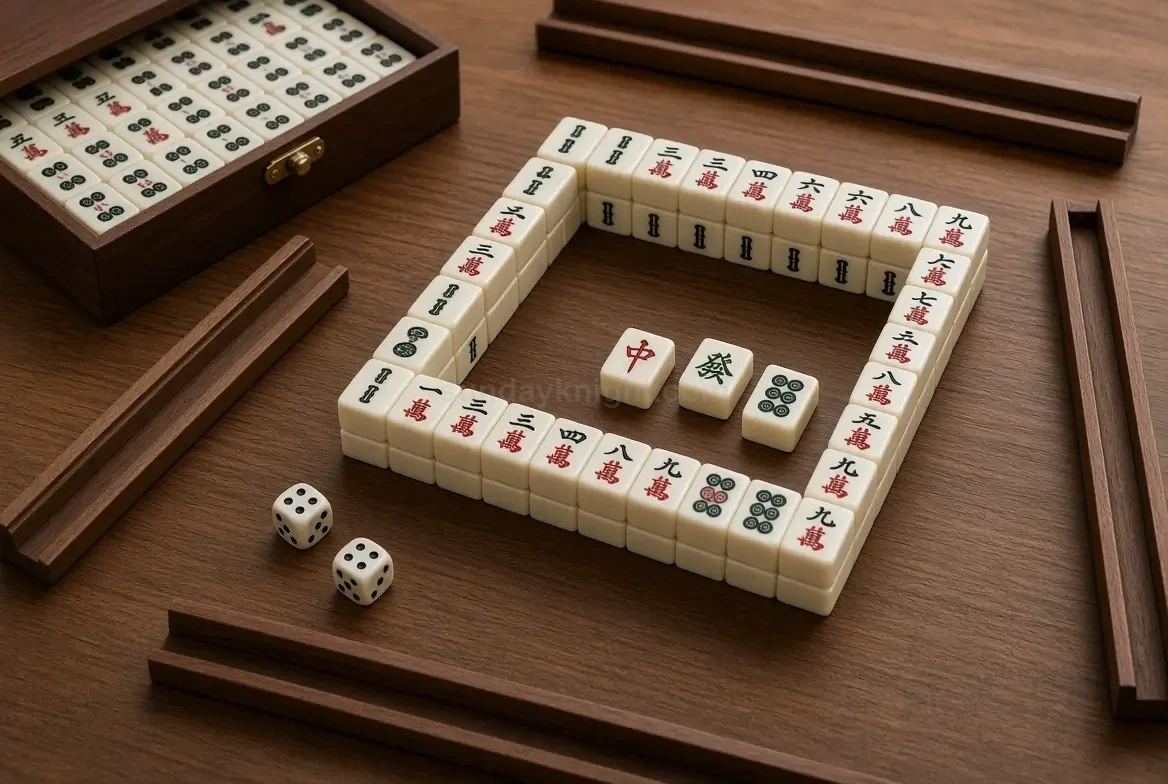
What is actually in the box
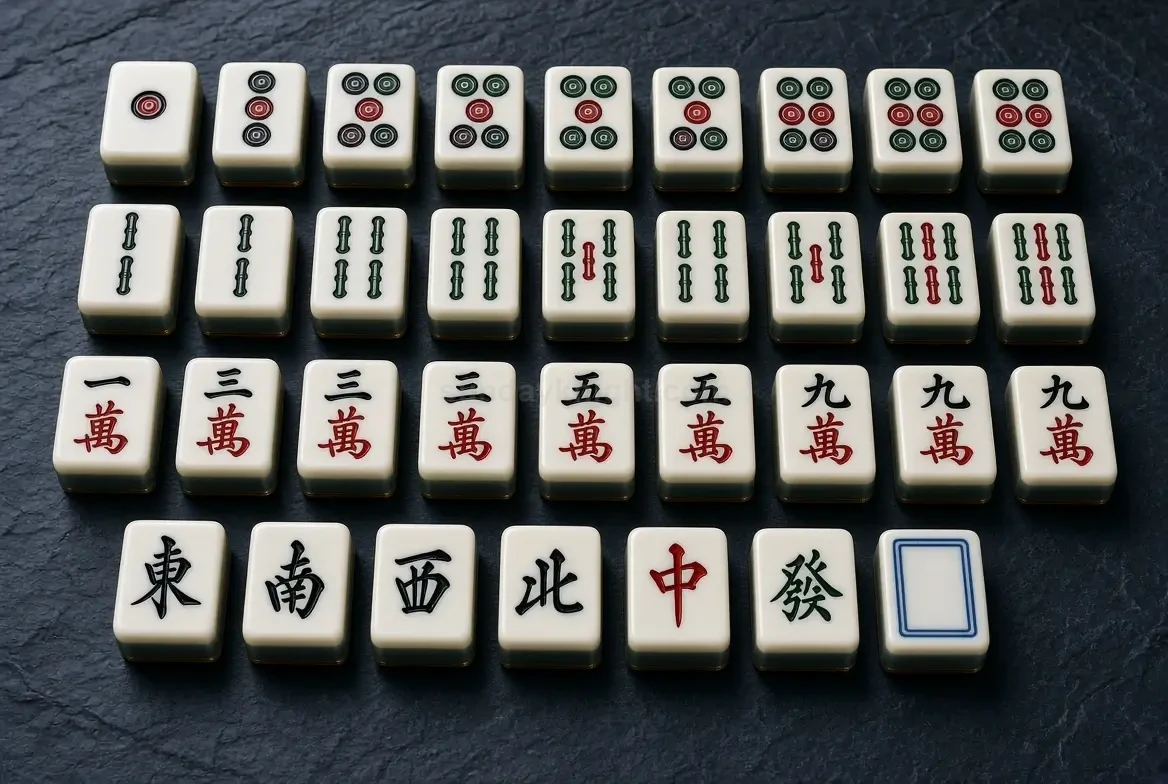
A standard East Asian set is built around 144 tiles. They fall into a few families you handle every game:
- The three suits — dots (circles), bamboos (sticks), and characters. Each suit runs 1 through 9, four of each rank. That is 108 tiles.
- Honors — the four winds and the three dragons, four of each. Another 28.
- Bonus tiles — flowers and seasons, usually eight. Some houses use them for extra scoring. Japanese riichi usually leaves them in the box.
That is the backbone. Regional rules then add or subtract. American mahjong wants eight jokers. Riichi drops the flowers and often includes red fives. Taiwanese tables add a larger flower pack. If a listing is vague about the count, that is not a rounding error. It is a warning.
Start with the game you actually play
This is the decision that prevents the expensive mistakes. A handsome 144-tile Chinese set will not play National Mah Jongg League hands, because those hands need jokers. A 152-tile American set is awkward for riichi. Buy for the table you sit at most weeks, not the one you might visit once.
Chinese classical and Hong Kong style
This is what most of the world means by “mahjong.” You want 136 or 144 tiles. Flowers and seasons come with the 144-tile version. No jokers. Racks are optional. Play is fairly fast, and scoring can be simple or elaborate depending on the house.
If you do not know which variant you prefer yet, a 144-tile Chinese set is the least painful first buy. You can leave the flowers in the box and still learn a few rule sets without ordering again.
American mahjong (NMJL)
Different game, related tiles. In play you need 152: the usual suits and honors, eight flowers, and eight jokers. A lot of retail boxes throw in spare blanks and land around 160–166 pieces. That is fine, as long as the jokers are actually jokers and not stickers.
Racks — usually with pushers — are not a nice extra here. They are how the game is played. You will also want the current National Mah Jongg League card. It is sold separately and it changes every year. Last year’s card is a different game.
Do not buy a 144-tile set for an American table and hope to improvise. Without jokers the published hands do not work.
Japanese riichi
Usually 136 tiles. No flowers, no jokers, and often one red five in each suit. Tiles tend to run a bit smaller, with clean high-contrast markings and not much ornament. Scoring sticks matter more than racks. If you mainly play riichi, buy riichi tiles. Stripping down a Chinese box works in a pinch. It never feels quite right.
Taiwanese and the rest
Taiwanese mahjong commonly puts 16 flower tiles on top of the standard 144, so 160, and deals more tiles per hand. Other regional games tweak flower counts and scoring in their own ways. When you are unsure, ask the group how many tiles they put on the table. Do not trust the country name on the box.

A quick map, if you want it in one place:
| Variant | Tiles in play | Do not skip |
|---|---|---|
| Chinese / Hong Kong | 136–144 | Dice; flowers if your house uses them |
| American (NMJL) | 152, plus spares | 8 jokers, 4 racks and pushers, current card |
| Japanese riichi | 136 | Red fives, scoring sticks |
| Taiwanese | 160 | Extra flowers — confirm with the group |
Material is about the hand, not the photo
Material decides three things listings like to blur together: how the tiles sound, how they look after a hundred nights, and how they feel when they have been in a warm hand for two hours. Price follows material. Feel should lead.

Acrylic is the sensible modern standard. Good acrylic is dense, colorfast, and hard to chip. It wipes clean, survives heating season, and comes in more colors than anyone needs. If you play weekly, start here.
Melamine and mixed resins sit next to acrylic on the shelf. The better ones are tough. The cheap ones feel hollow and lose corners within a season. If the listing only says “plastic” and the price is suspiciously low, assume hollow.
Bakelite and the other mid-century plastics have a warm, slightly amber weight that collectors chase for a reason. They click lower. They also yellow, they can get brittle, and you are paying for the object as much as for the game. Buy vintage because you want that object. Do not buy it as “better acrylic.”
Bone and bamboo is the old construction: a pale face on a bamboo back, with a seam you can usually see. Nothing else feels quite like it. Genuine sets warp in damp rooms and cost what handmade things cost. The modern two-tone lookalikes are a fair compromise if you want the silhouette without museum care.
A few things I would leave:
- Ivory. New trade is illegal in most places, and even antique ivory is a headache you do not need.
- Flocked mini travel tiles as your only set. Fine on a plane. Miserable for a Saturday night.
- Faces that are printed on, with no engraving. The ink wears. Engraved and filled faces last.
| Material | Durability | Feel | Ballpark price | Makes sense for |
|---|---|---|---|---|
| Acrylic | High | Smooth, solid click | $40–$150 | Most players, gifts, clubs |
| Melamine / resin | Medium to high | Hard; cheap ones feel light | $25–$90 | Casual play, travel |
| Bakelite / vintage | High if intact | Warm, heavy | $200–$600+ | Collectors |
| Bone and bamboo | Excellent if you look after it | Dry, traditional | $300–$1,200+ | Purists, heirlooms |
Size is not a style choice
Face size decides whether you can read a 9-bamboo from across a crowded table. Thickness decides whether a two-tile wall stands or slumps when someone reaches for the tea.

Useful ranges, not commandments:
- Travel / mini — about 20–28 mm on the long face. Packs well. Tiring over a full night.
- Chinese and riichi standard — roughly 30–34 mm long. This is the everyday size for most of Asia.
- American “jumbo” — often 35–40 mm. Easier to read, heavier to shuffle, and they need racks cut to match. A jumbo tile in a standard rack is a bad marriage.
Measure the table too. Four walls of large tiles plus racks need more than a café table. A test that actually works: build a two-high wall and slide it a few centimeters. If it collapses, the tiles are too thin. If you cannot read the characters in ordinary indoor light at about half a meter, the markings are too faint or the tiles are too small.
The extras are part of the set
Tiles without the right bits around them are a half purchase. What you need depends on the variant. A few pieces earn their keep in almost every house.

Racks and pushers. Required for American play; optional elsewhere, though they help if hands are stiff or the table is crowded. The slot has to match tile thickness. Too loose and tiles fall on their faces. Too tight and you scratch them. Wood beats brittle plastic.
Dice. Two or three to start the deal. They should be large enough to read and heavy enough to roll. The tiny ones that arrive loose in a polybag tell you the manufacturer stopped at “filled a box.”
The case. A set lives most of its life in storage. Look for a rigid box or hard-shell case with a latch that actually latches. Soft pouches let faces grind against backs. A tray or ribbon so you can lift a layer without dumping 144 tiles into your lap is worth more than a printed lid.
Scoring gear. Riichi players want tenbo sticks. Many Chinese tables keep score on paper. American players need this year’s NMJL card. None of that should decide the tile maker. It should decide whether you need a second order.
Where it will live
Be honest about the room. A heavy bone-and-bamboo chest is a pleasure on a dedicated games table and a nuisance if it has to come out of a closet every Sunday. Soft cases travel better and protect less. Hard cases protect better and eat luggage space.
If the set will sit out, the box and the back color start to matter as much as durability. If it lives in a bag between club nights, care more about the zipper and the hardness of the tiles than about a pretty lid.
Pretty is allowed. Illegible is not.
Before you fall for a floral back or a pastel face, look at the working surface.
- Characters should be engraved or deeply molded, then filled. Printed ink rubs off.
- Contrast has to be high. Black or dark green on cream. Not gray on beige, and not gold on pale gold.
- A satin face is easier under a bright lamp than a mirror gloss that turns every overhead light into a flare.
- Western indices in the corner help beginners and American players. Older tables sometimes prefer faces without them. Neither is wrong. Mixing both styles at one table is.
Cream faces with green or navy backs are still the easiest to live with. Dark faces photograph well and can be harder to parse in a dim room.
What to spend, and what a listing should tell you
You can find a workable acrylic starter well under $100. A better club set sits in the low-to-mid hundreds. Vintage bakelite and true bone-and-bamboo climb from there into collector money. Designer American sets with coordinated racks can cost what furniture costs, because they are partly furniture.
Spend for how often the set will come out, not for how much you like the idea of mahjong. A $40 set used every week beats a $400 set nobody wants to shuffle. That said, the jump from hollow plastic to a midweight acrylic is the best money most people spend. The tiles stop sliding like toys and start stacking like a game.
On the product page, look for numbers. Exact tile count. Face size in millimeters. A material with a name, not the word “premium.” Whether the markings are engraved. Whether racks are included, and how long they are. Whether jokers exist if you need them. One pretty hero photo is not a specification. Reviews that mention chipping, fading, or missing tiles on arrival are.
You do not need a famous brand. You need a seller who will replace a misprinted dragon.
Before you pay
- I know which variant my table plays, and the tile count matches it.
- American game: eight jokers, four racks that fit these tiles.
- Riichi: I am not paying extra for flowers and jokers I will never use — or I am fine ignoring them.
- The material is named. Acrylic or a dense resin for regular play. Vintage or bone only if I want that object.
- Face size and thickness are listed. The wall will stand. I can read the marks indoors.
- Markings are engraved or inlaid, with real contrast.
- Dice, a decent case, and any scoring gear I actually use are in the box or in the budget.
- The price matches how often this thing will leave the shelf.
If it is a gift
Ask, quietly, which rules they already play. A lavish American set given to a riichi player becomes a nice paperweight. If you cannot ask, a 144-tile cream acrylic Chinese set in a decent box is the least wrong universal present. It covers the most widely played family of games and does not lock anyone into one league card.
Put a note in the box with the tile count and the intended variant. People who do not play yet cannot infer those things from the lid.
Keep it simple after you buy
Wipe acrylic and melamine with a slightly damp cloth and let them dry before they go back in the box. Keep bone-and-bamboo out of bathrooms and sunrooms. Do not store tiles loose in a bag. If a new case smells like a warehouse, air it out before the first game. None of this is fussy. It is how a set lasts ten years instead of two.
Buy the set you will use
It is less mysterious than the market makes it. Start with the rules. Buy enough tiles, in a material that feels like a tool, at a size your hands and table can live with. Add the few extras your variant actually needs. Spend enough that the tiles do not apologize for themselves, and not so much that you are afraid to shuffle.
A good set disappears. What remains is the wall, the wait, the discard, and that small click when a tile goes down flat. That sound is the reason to choose carefully.
If the racks have to match the tiles
This is the part most boxed sets get wrong. American tables, especially, need racks and pushers cut to the tile thickness you actually bought. A jumbo tile in a shallow slot slides around; a thin Chinese tile in a deep slot tips over. If you have already chosen the tiles and still need the furniture around them, it is often cleaner to have the racks made to that size than to keep swapping sets.
Sunday Knight Co makes custom acrylic mahjong pieces — racks, pushers, and related table parts — to a length, thickness, and color you specify. The useful starting points, if you are building an American-style table, are a clear acrylic rack with pushers, a magnetic-pusher rack that stays put when the wall moves, and a standalone tile pusher if you already like the racks you own. Clubs ordering a run of matching gear can look at the 17.5-inch wholesale rack.
None of that replaces the earlier checklist. Get the tiles right first. Then, if the box still feels incomplete, have the acrylic parts cut to those tiles instead of hoping a generic rack will fit.
About the author
Ling Hu is a senior market researcher at Sunday Knight Co. Ltd. She has spent more than ten years in the acrylic products industry, with a particular focus on what buyers in the United States and Europe actually ask for — tile size, rack fit, finish, and which details tend to cause a reorder. The notes in this guide come from that work, not from a single product line.
 English
  Deutsch
  Français
  Italiano
  Español
  Nederlands
  한국어
한국어